

How Can You Improve Board Meeting Efficiency in 2026?
Last Updated: October 30, 2026
Quick Summary
You improve board meeting efficiency in 2026 by designing each meeting before it starts: write a timed, outcome-led agenda, move routine items to a consent agenda, circulate the binder early, and track every decision with a named owner and due date. Structure, not fewer meetings, is what makes each sitting count.
- Write the intended outcome beside every agenda item and put strategic items first.
- A consent agenda approves routine, non-controversial items in one motion without discussion.
- Most boards should aim for two to three hours for a standard meeting.
- No action closes without a named owner and a due date in the register.
- Record a baseline over three meetings before changing anything else.
Table of Contents
- Why Board Meeting Efficiency Matters More in 2026
- Designing an Effective Board Meeting Agenda
- Your Board Meeting Preparation Checklist
- How Long Should a Board Meeting Last?
- Using Board Portal Software to Cut Preparation Time
- Facilitation and Inclusive Discussion in Hybrid Meetings
- Tracking Decisions and Action Items After the Meeting
- Start Your 30-Day Efficiency Trial with Athena Board
- Frequently Asked Questions
Why Board Meeting Efficiency Matters More in 2026
Board meeting efficiency is the practice of designing meetings, materials and follow-up so directors spend their limited time on decisions rather than process.
The pressure is real. Directors juggle compliance, strategy and risk in a handful of sittings each year.
The evidence points to structure over frequency. Datasite’s 2026 guidance on decisive board meeting outcomes notes that poorly structured meetings delay progress and reduce confidence, which suggests simply meeting less often fixes nothing. Meanwhile, Sherpany’s 2026 review of practical board effectiveness levers identifies meeting design, binder quality, decision-making and performance review as the four areas worth improving first.
So the question is not “how do we meet less?” It is “how do we make each meeting count?”
Below, we break down the changes that move the needle, from agenda design to the 30-day trial that proves whether they work for your board.
Designing an Effective Board Meeting Agenda
An effective board meeting agenda is a timed, outcome-led plan that tells directors what decision each item needs and how long it gets.
Most agendas fail because they list topics instead of outcomes. “Finance update” tells a director nothing.
Start with three rules:
- Write the intended outcome beside every item
- Put strategic items first, while energy is high
- Cap routine reporting and move it to consent
Datasite’s 2026 meeting design guidance recommends optimising agendas for depth rather than breadth. Fewer topics, discussed properly, beat a packed schedule every time.
For a deeper walkthrough, see our guide to simplifying board meeting agendas for nonprofits.
Time Allocation and the Consent Agenda
A consent agenda is a block of routine, non-controversial items approved in one motion without discussion. It is the single fastest way to reclaim discussion time.
Here is how to split a typical two-hour meeting:
| Agenda Block | Time | Purpose |
|---|---|---|
| Consent agenda | 5 min | Approve routine items in one motion |
| Strategic discussion | 60 min | Debate one or two major decisions |
| Performance and risk | 30 min | Review against plan |
| Governance and compliance | 15 min | Noting, declarations, approvals |
| Close and actions | 10 min | Confirm owners and dates |
Any director can pull an item off the consent agenda for discussion. That safeguard keeps the process honest.
Your Board Meeting Preparation Checklist
Preparation is where efficiency is won or lost. A board that receives its binder late will always meet badly.
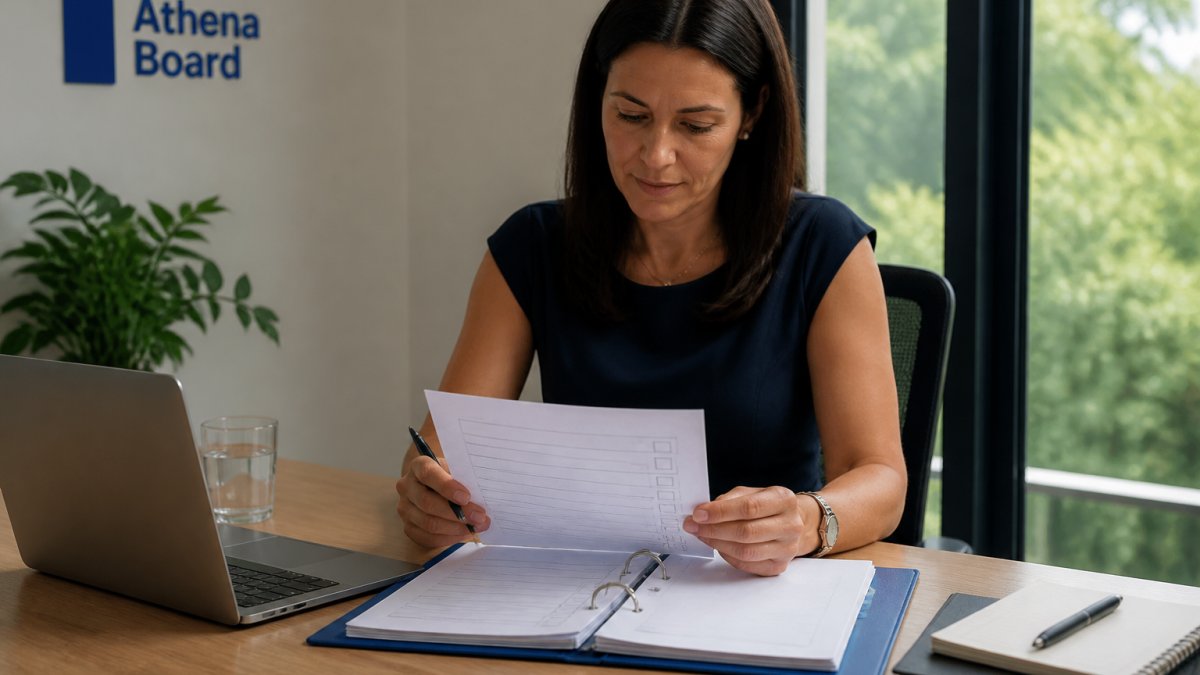
Use this checklist before every meeting:
- Agenda circulated with outcomes and time limits
- Binder uploaded as a single, searchable file set
- Papers limited to what supports a decision
Watch out: sending the binder the night before is the most common failure we see. Directors arrive unprepared, discussion stalls, and decisions get deferred to the next meeting.
If the pre-meeting workload is the bottleneck, it is worth seeing how a board portal simplifies board meeting preparation.
How Long Should a Board Meeting Last?
Most boards should aim for two to three hours for a standard meeting, with longer sessions reserved for strategy days. There is no universal rule, and guidance cautions against treating one cadence as optimal for every board.
What matters more is what fills the time. A three-hour meeting with a tight agenda beats a ninety-minute meeting with no structure.
Practical benchmarks to test against your own board:
- Routine items should not exceed a quarter of the meeting
- Strategic discussion should get the largest single block
- Any item running past its allocated time gets deferred, not extended
Track actual versus planned time for three meetings. The pattern will tell you where the waste sits.
Get started with your free trial today →
Using Board Portal Software to Cut Preparation Time
Board portal software is a secure digital workspace where directors access binders, agendas, minutes and resolutions in one place.
The efficiency gain comes from three places:
- One source of truth for every document
- Version control, so nobody reads an outdated paper
- Audit logs that show who accessed what, and when
Athena Board includes AI-powered document summaries and Athena Chat, and detailed audit and usage logs give company secretaries a clear record of access for transparency and accountability.
For a closer look at structuring digital binders for shorter meetings, read how to structure digital board packs for high-impact deliberation.
Pricing depends on your board size and requirements, so check the Athena Board website for current details.
Facilitation and Inclusive Discussion in Hybrid Meetings
Good facilitation is the difference between a decision and a circular conversation. The chair sets the tone, protects the time and makes sure quieter directors get heard.
The core problem is asymmetry. Directors in the room pick up on side conversations, body language and the informal pre-discussion that happens before an item is formally opened. Remote directors get the agenda item and nothing else.
Facilitation habits that hold up in a hybrid room
- Open each item by restating the decision required, in one sentence, so remote and in-room directors start from the same place.
- Name the speakers for each item in advance. A short speaking order stops the same two voices from filling the space before anyone else has formed a view.
- Ask quieter and remote directors first, before the debate settles and positions harden.
A simple chairing test: at the end of each strategic item, ask yourself whether every director who wanted to speak had the chance to. If the answer is no, the item was not properly facilitated, regardless of how quickly it closed.
Making hybrid participation genuinely equitable
Efficiency that comes at the expense of director engagement is not efficiency, it is a decision made with less input than the board thought it had. A few practical checks close most of the gap:
- Time zones and scheduling. For boards with directors interstate or overseas, rotate meeting start times across the year rather than anchoring every meeting to one city’s business hours. Publish the annual calendar early so directors can plan around it.
- Accessibility before the meeting, not during it. Confirm captions or live transcription, readable font sizes in the binder, sufficient contrast, and clear audio for every participant. Ask directors privately whether they need any adjustment, rather than assuming the default setup suits everyone.
- One channel for questions. Side chats fragment the discussion. Agree that substantive questions go through the main conversation or a single monitored channel, so the chair can see and respond to them.
Letting the same two voices dominate every discussion looks efficient. It usually means the board is not hearing the risk until it is too late, and in a hybrid meeting the effect is amplified, because the quieter directors are often the remote ones.
::: Broadening the scope of participation requires chairs to delegate effectively so that every director feels empowered to contribute their unique perspective before a consensus is reached.
For more on running online sessions well, see how to improve board meeting collaboration online.
Tracking Decisions and Action Items After the Meeting
A meeting that produces no tracked actions was a conversation, not a board meeting. Every decision needs an owner, a due date and a place to live. That much is standard advice. What most boards lack is a way to tell whether their follow-up is actually getting better, meeting after meeting.
The minimum viable action register
Set a simple rule: no item closes without a named owner and a date. Record it in the minutes, then review it at the start of the next meeting. A workable register has five fields and no more:
- The decision or action, stated as a single sentence
- The owner, by name rather than by role
- The due date
A register that grows extra columns tends to stop being updated. Keep it lean and make it the single place actions live, rather than scattering them across emails, minutes and separate spreadsheets.
Measuring whether follow-up is improving
This is where most boards stop short. Tracking actions is not the same as knowing whether the tracking is working. Four measures, tracked over three or four meetings, will tell you more than any impression of how the meetings feel:
- Action completion rate. The proportion of actions closed by their due date. A board that consistently closes most actions on time has a functioning follow-up cycle; one that does not has a register that is being written but not used.
- Action age. How long the oldest open action has been open. A single action that has rolled through several meetings is a signal that either the owner is not resourced or the board has not really decided what it wants.
- Decision turnaround. The time between an item first appearing on the agenda and a decision being recorded. Long turnarounds usually point to a preparation problem upstream, not a follow-up problem.
Pick one measure, action completion rate is the easiest to start with, and record it for three meetings before changing anything else. A baseline turns a vague ambition to “follow up better” into something the board can actually see move.
Escalation and review
A register only works if overdue items have somewhere to go. A common pattern is for the company secretary to circulate the register a few days before each meeting, flag anything overdue, and for the chair to raise overdue items as a standing agenda item rather than letting them sit quietly.
Minutes should be circulated within a few days, not weeks, so that actions are captured while the discussion is still fresh. For a practical method, read our guidance on driving action and accountability with well-kept meeting minutes.
Start Your 30-Day Efficiency Trial with Athena Board
Thirty days is enough to test whether a change works. Pick one meeting, apply the checklist, and measure the result against your baseline.
Here is a simple plan:
- Days 1-7: Record a baseline. Time each agenda item at your next meeting.
- Days 8-14: Rebuild the agenda around outcomes and add a consent block.
- Days 15-21: Move the binder into Athena Board and circulate it earlier.
Improving board meeting efficiency in 2026 is less about working harder and more about designing the meeting before it starts. Athena Board gives your board a single secure workspace for agendas, binders, resolutions and minutes, backed by detailed audit logs and AI-powered summaries.
Frequently Asked Questions
How can a board meeting be made more efficient?
Start with a focused agenda that states the intended outcome for each item. Send the binder at least five days ahead so directors arrive prepared. Allocate fixed time blocks, use a consent agenda for routine approvals, and close with named action owners. Technology helps: board portal software with intelligent document summaries cuts reading time, and audit logs keep follow-up accountable.
What should be included in an effective board meeting agenda?
An effective board meeting agenda lists each item with its purpose, the presenter, the time allocated and the decision required. Put strategic priorities first when energy is highest, group routine approvals into a consent agenda, and reserve the final ten minutes for action items and owners. Specifying the intended outcome for every agenda item and optimising for depth rather than breadth helps boards make better use of meeting time. Circulate the agenda with the binder so directors can flag conflicts before the day.
How long should a board meeting last?
There is no fixed rule, and guidance cautions against treating one cadence as universally optimal. Most full-board meetings run two to three hours, with committees meeting separately. What matters more is structure: Poorly structured meetings delay progress and reduce confidence, so simply shortening or lengthening a meeting will not fix the underlying problem. Set a firm finish time, allocate minutes per item, and review actual timings after each meeting to adjust the next one.
How can board portal software improve meeting efficiency?
Board portal software centralises the binder, agenda, resolutions and minutes in one secure workspace, so directors stop searching through email attachments. Athena Board adds AI-powered document summaries and Athena Chat, detailed audit and usage logs for transparency and accountability, and protected links for external contributors. For company secretaries managing compliance, the audit trail shows who accessed which document and when. Pricing depends on your board size and needs, so check the website for current details.
