
Smarter Agendas, Shorter Meetings: Structuring Digital Board Packs for High-Impact Deliberations
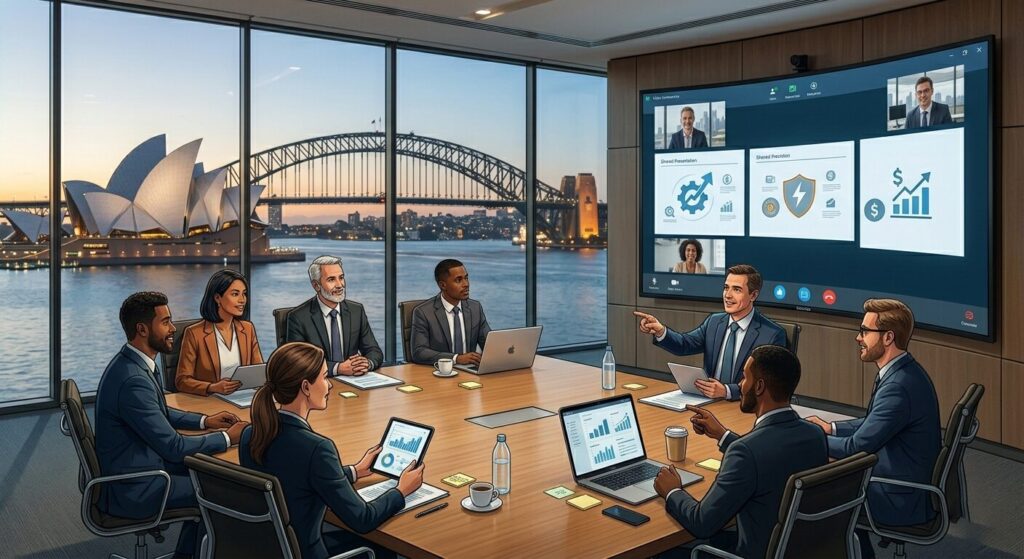
In the modern corporate landscape, the sheer volume of compliance, regulatory oversight, and strategic complexity has expanded exponentially. Yet, the time allocated for board meetings remains stubbornly fixed. For many Company Secretaries, the traditional solution has been to compile increasingly dense board materials, often running into hundreds of pages, in the hope that more information equates to better governance. Smarter Agendas, Shorter Meetings.
The reality, however, is quite the opposite. Oversized, poorly structured board materials lead to information fatigue, passive reading, over-reliance on summaries and meetings dominated by retrospective operational updates rather than forward-looking strategy.
To reclaim the boardroom for high-impact deliberations, Company Secretaries must transition from being mere aggregators of information to architects of focus. The key lies in leveraging digital agenda builders to intentionally tie strategic priorities to specific document modules.
The True Cost of the “Bloated Board Pack”
When a board pack becomes an unstructured repository of every departmental report, the boardroom dynamic suffers. Non-Executive Directors (NEDs) spend their limited preparation time filtering the signal from the noise. Consequently, when the meeting commences, valuable hours are routinely consumed by executives rehearsing taken-as-read operational data, leaving precious little time for critical debate on risk, capital allocation, and long-term value creation.
A smarter digital agenda directly addresses this friction by imposing structural discipline before a single document is uploaded.
1. Grounding the Agenda in Strategic Pillars
A high-impact agenda does not simply list items chronologically; it categorises them by strategic weight. Digital agenda builders allow Company Secretaries to map every discussion point directly to the organisation’s core strategic priorities.
- Establish a Dynamic Framework: Rather than relying on generic headings like “CEO’s Report” or “General Business,” structure modules around specific pillars such as Growth & Innovation, Risk & Compliance Architecture, or Capital Optimisation.
- Visual Prioritisation: Use your digital portal to clearly distinguish between Decision Items (requiring formal resolutions), Discussion Items (requiring strategic input), and Information Items (taken as read). Using Athena Boards ‘header’ feature allows this segregation.
By visually segmenting the agenda, directors are immediately oriented toward where their cognitive energy is most urgently required.
2. Modular Document Architecture: Linking Context to the Item
One of the greatest drivers of wasted time in a boardroom is the fragmented document search. When a director must flip back and forth between a 50-page financial appendix, a risk register, and the main agenda, the flow of deliberation is broken.
Modern digital board portals resolve this through a modular document structure:
The Modular Approach: Every single agenda item should act as a self-contained ecosystem (Athena Board supports this natively). The specific business case, the corresponding financial models, legal advice, and the proposed resolution should all be nested directly within that specific agenda module.
This ensures that when a strategic priority is called for discussion, directors have the exact, curated context at their fingertips—eliminating the standard phrase, “Can someone point me to the relevant page in the appendix?”
3. Enforcing Disciplined Time Allocation
Time is the most scarce asset in corporate governance. A highly effective technique for the Company Secretary is to assign strict, realistic time budgets to each digital agenda module based on its strategic importance.
| Agenda Item / Module | Classification | Allotted Time | Associated Documentation |
| 1. Strategic Growth: Market Expansion Proposal | Decision | 45 Mins | Business Case, Financial Forecast, Legal Risk Briefing |
| 2. Cyber Security Framework & AI Warning Response | Discussion | 30 Mins | Risk Matrix, CTO Briefing Note |
| 3. Quarterly Financial Performance Overview | Information | 10 Mins | CFO Report (Taken as Read; Q&A Only) |
Digital agenda builders allow you to lock these time frameworks into the board’s view during preparation. This transparency signals to presenters that they cannot spend 20 minutes presenting slides; instead, they must immediately open the floor to the pre-framed strategic questions.
4. Driving Pre-Meeting Engagement
The secret to a shorter, smarter meeting is ensuring that the majority of clarifying questions are handled before the board enters the room.
Utilising the digital portal’s secure annotations and integrated audit trails allows organisations to log queries directly against the relevant document module in the days leading up to the meeting. Management can respond within the platform, making the clarification visible to all board members.
Consequently, when the item is called during the live session, the board can bypass the baseline facts and immediately dive into high-level, critical deliberation.
Summary: The Secretary as a Governance Catalyst
An elegant, tightly structured digital board pack is not merely an administrative convenience, it is a tool for competitive advantage. By leveraging digital agenda builders to enforce a modular, strategically aligned, and time-budgeted framework, Company Secretaries can fundamentally shift the boardroom dynamic.
The result? Less time spent navigating documents and looking backward, and more time dedicated to the high-impact insights that drive organisational success.
Athena Board can help, contact us at sales@athenaboard.com.